Disconnected systems. Manual processes.
IBM partners build solutions using IBM technologies and sell them to customers through the ecosystem — but the process to build, register, and co-sell those solutions with IBM was fragmented across multiple tools. Partners and sellers tracked opportunities in different platforms, co-sell registrations were handled by email, marketplace validation took up to two weeks, and collaboration relied on spreadsheets, PPTs, and manual updates. The result was limited visibility into ecosystem opportunities, slow deal progression, and high operational overhead.
Marketplace validation alone took up to two weeks, with no shared view for partners and sellers to track a deal.
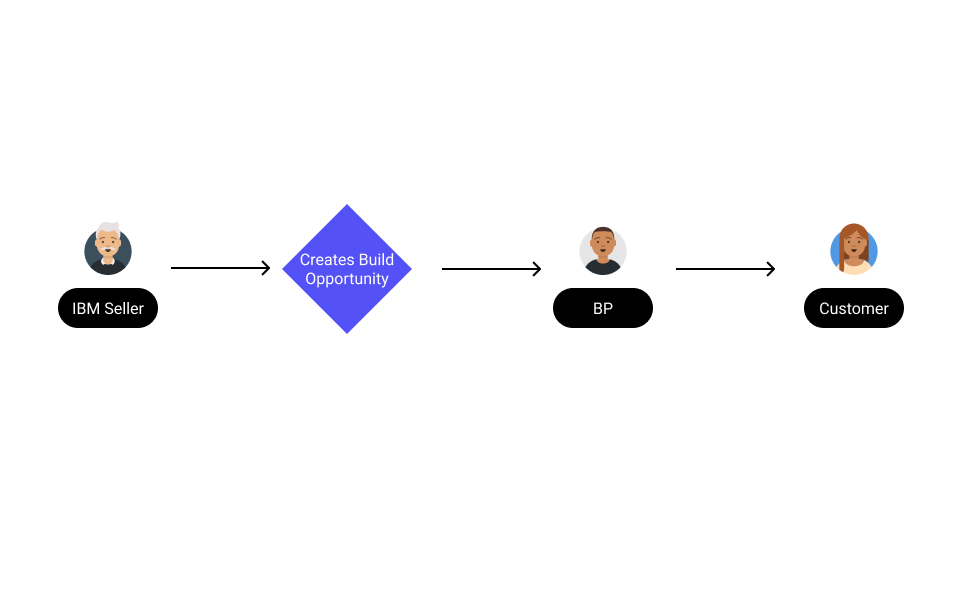
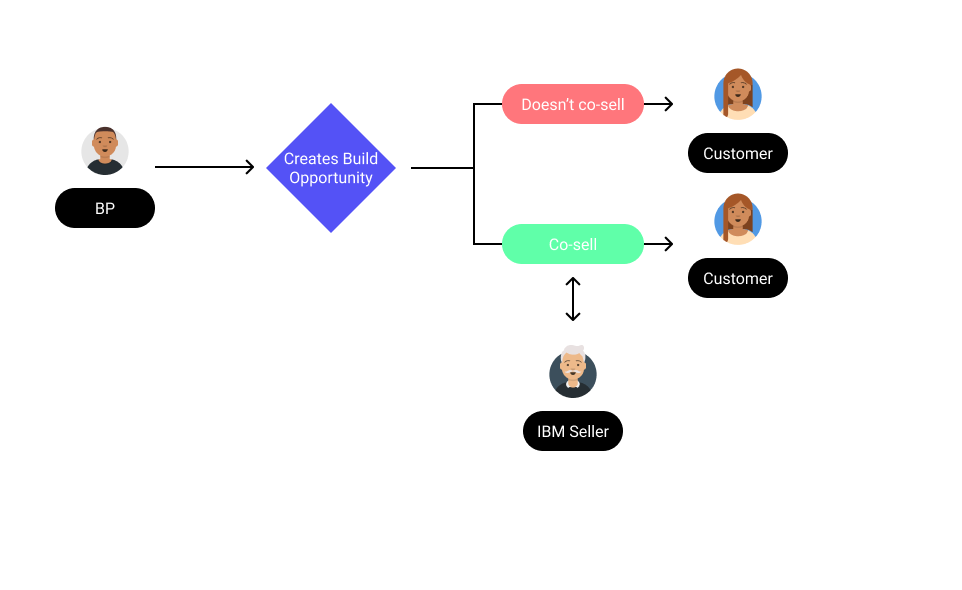
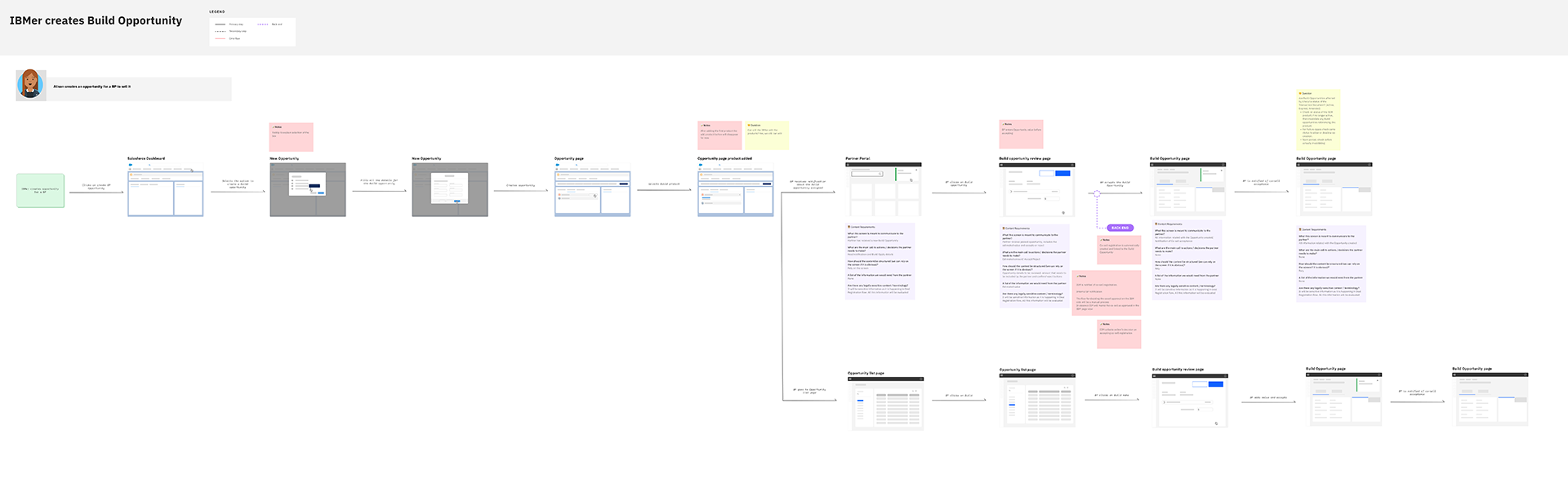
I ran a service blueprinting workshop with stakeholders and users to align on goals, surface key pain points, and build a shared understanding of the end-to-end experience.
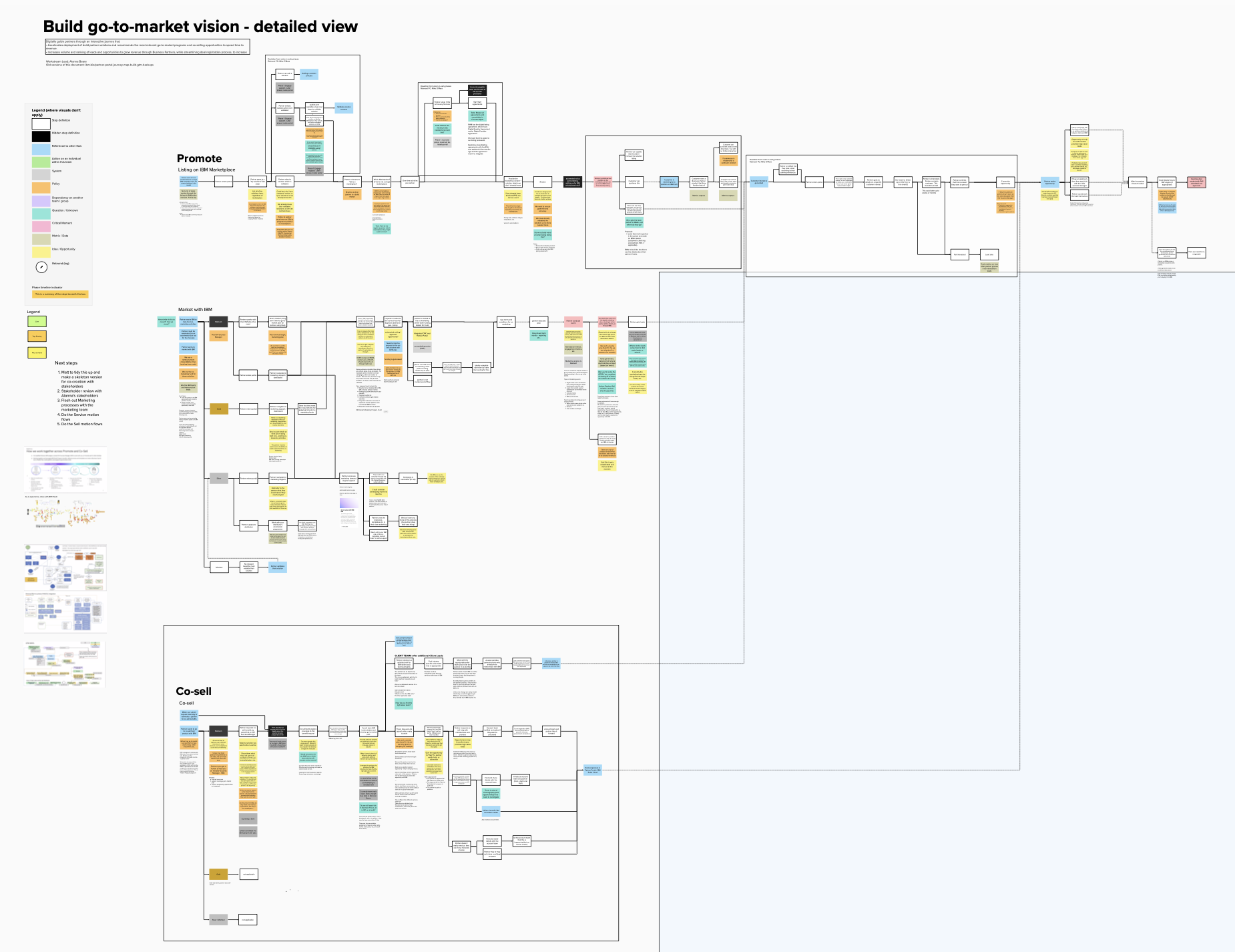
What I found:
I created wireframes to validate feasibility and align with stakeholders before moving to high-fidelity design.
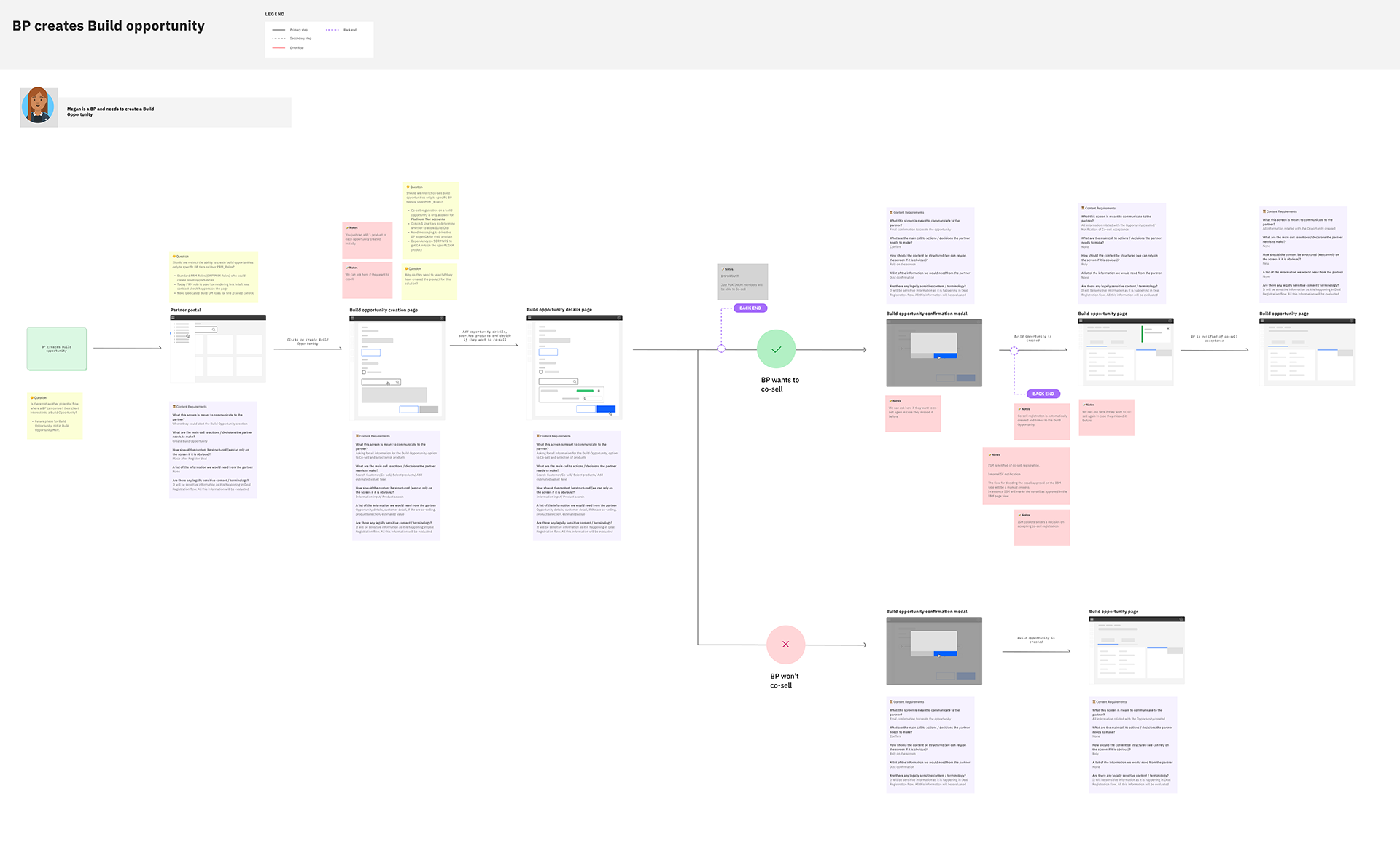
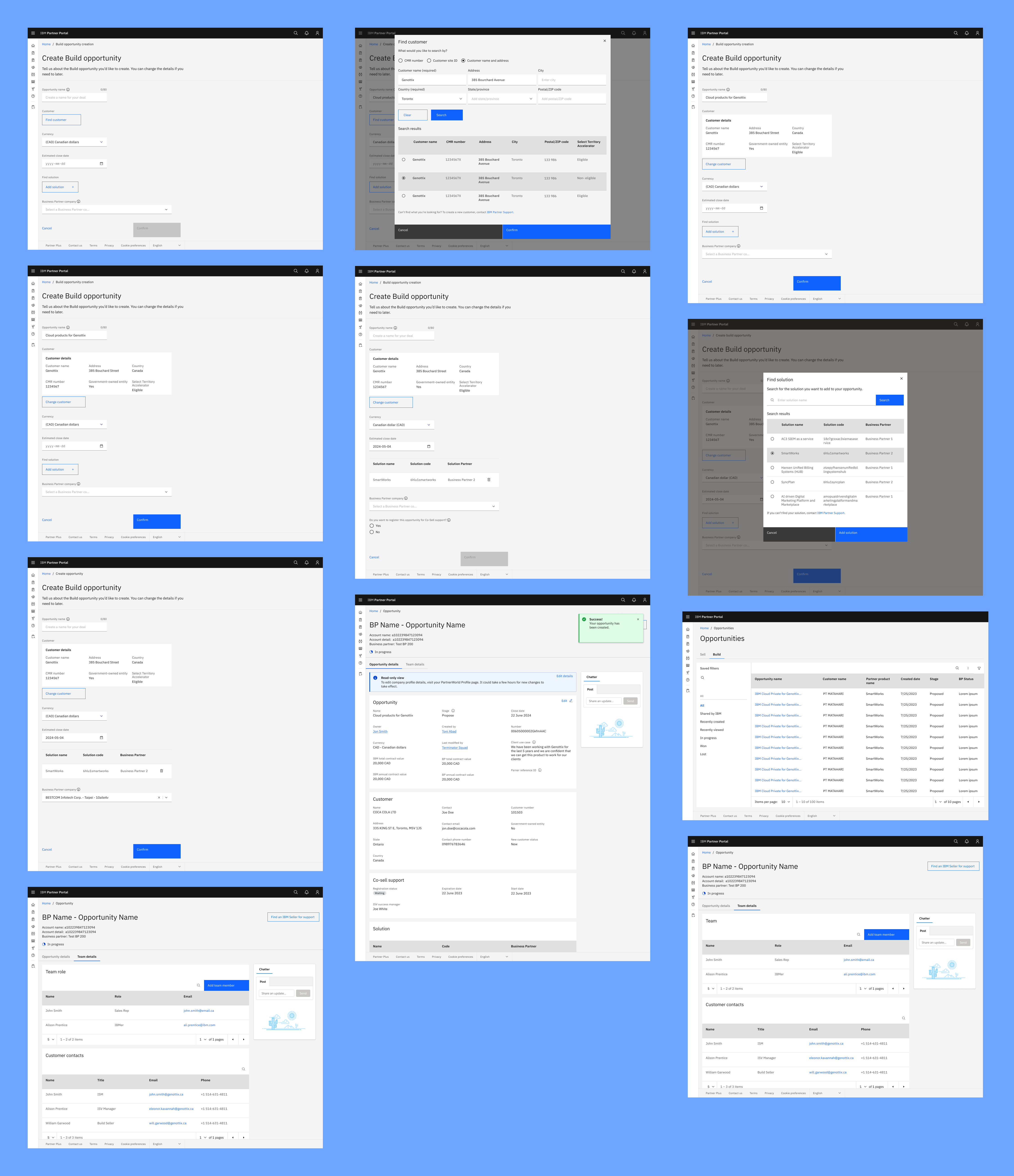
I redesigned the Build experience into a single-page, 7-step workflow:
I moved all opportunities into IBM Sales Cloud, creating one shared platform for partners and IBM sellers to track deals, create opportunities, and collaborate.
I automated the co-sell protection process, letting partners disclose customer information safely and activate collaboration without a technical intermediary.
I reduced dependency on spreadsheets, emails, and legacy tools, enabling faster progression through the partner journey.
With only two squads and limited time, I had to prioritise the highest-impact changes first, not the full vision.
A streamlined, centralised, automated system that reduced friction and improved collaboration. Outcome of the redesigned Build experience
🎯 Centralising opportunity management and automating manual processes reduced friction for partners and enabled faster collaboration with IBM sellers.