📋 The Problem

Manual emails. Fragmented systems. Zero transparency.

The Partner Advocacy Program (PAP) rewards IBM sellers when partner solutions include IBM technology — but the process to get there relied on manual emails, fragmented systems, and commission calculations neither partners nor sellers could see into. Partners register deals through a separate PAP portal, which then has to link partner sales to IBM product orders to calculate commissions, with no visibility into how that number was reached.

Role

  • Title: Senior Product Designer
  • Focus: Enterprise Partner Ecosystem
  • Scope: PAP redesign & co-sell integration into IBM Partner Portal
  • Team: Product, engineering, sales, partner ops
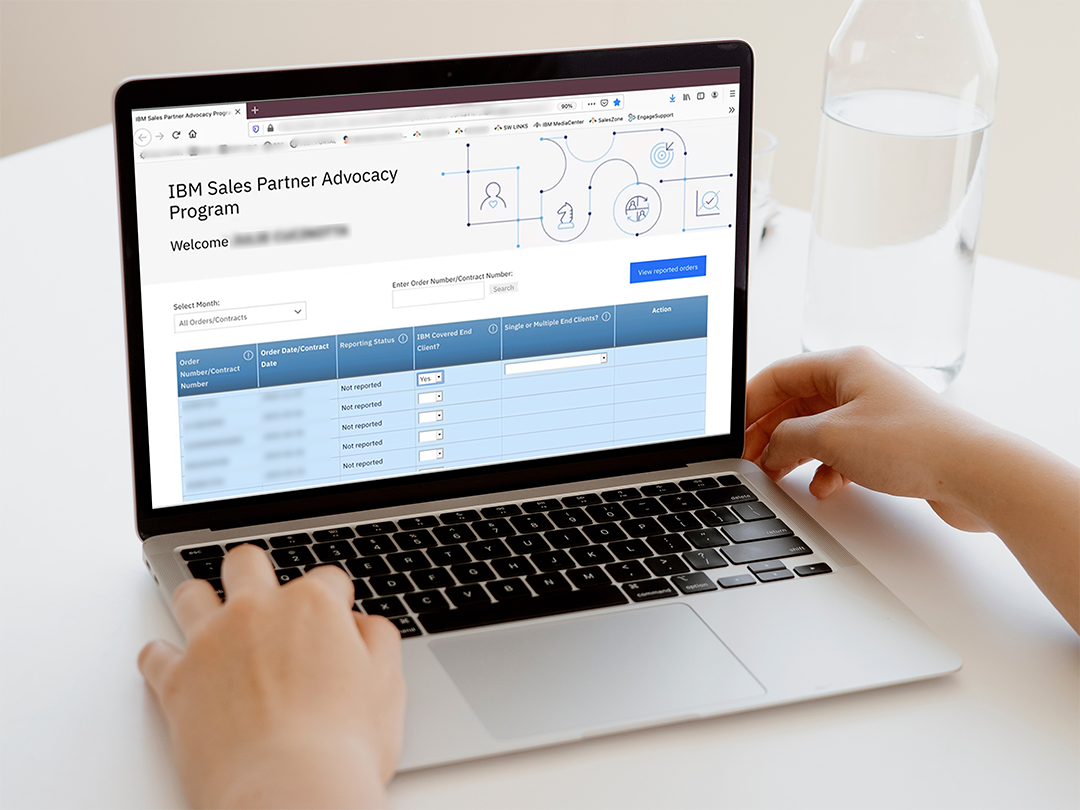
The old, fragmented PAP experience

Sellers had low confidence in their own commission payouts, and partners had no visibility into why.

🎯 The Goal

I set out to redesign the PAP experience and integrate it into IBM's Partner Portal — replacing a manual, email-driven process with a system that simplifies workflows, makes incentive calculations transparent, and supports IBM's wider co-sell strategy with partners.

🧭 Approach & Solution

Three pillars drove every decision I made, the same discipline I've applied across the wider Partner Portal:

01

Simplify

I reduced manual steps and unified the fragmented tools sellers and partners had been forced to work across

02

Transparency

I designed visibility into incentive calculations and partner orders, so sellers could see how a commission was reached, not just the final number

03

Automate

I replaced manual deal validation with automated integrations into IBM's order systems

What I owned

01
Discovery

Service blueprinting

I facilitated workshops to map the full lifecycle of a partner deal and a seller incentive, end to end, surfacing where the two processes were actually connected and where they'd drifted apart.

02
Structure

Workflow redesign

I redesigned the workflows for opportunity registration, order linking, and incentive tracking as one connected flow instead of three separate manual processes.

03
Integration

Partner Portal integration

I designed the experience to integrate PAP directly into IBM's Partner Portal, rather than leaving it as a standalone tool sellers had to remember to check separately.

04
Alignment

Stakeholder alignment

I presented design concepts to leadership and cross-functional teams across product, engineering, sales, and partner ops to keep the redesign moving without stalling in committee.

🖥️ Process

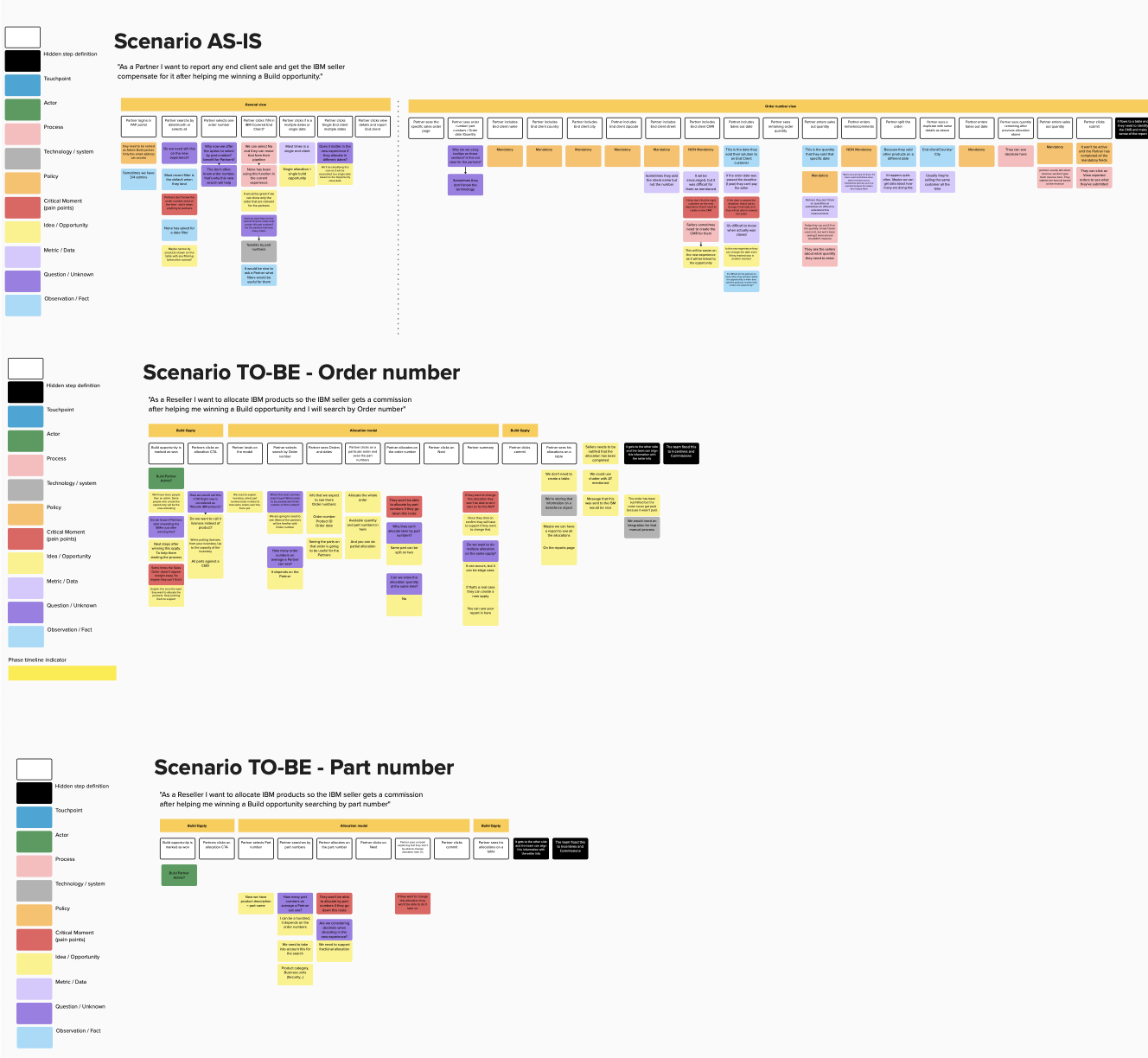
I facilitated blueprinting workshops to map the full lifecycle of a partner deal and a seller incentive before anything went into Figma.

Service blueprinting workshop mapping

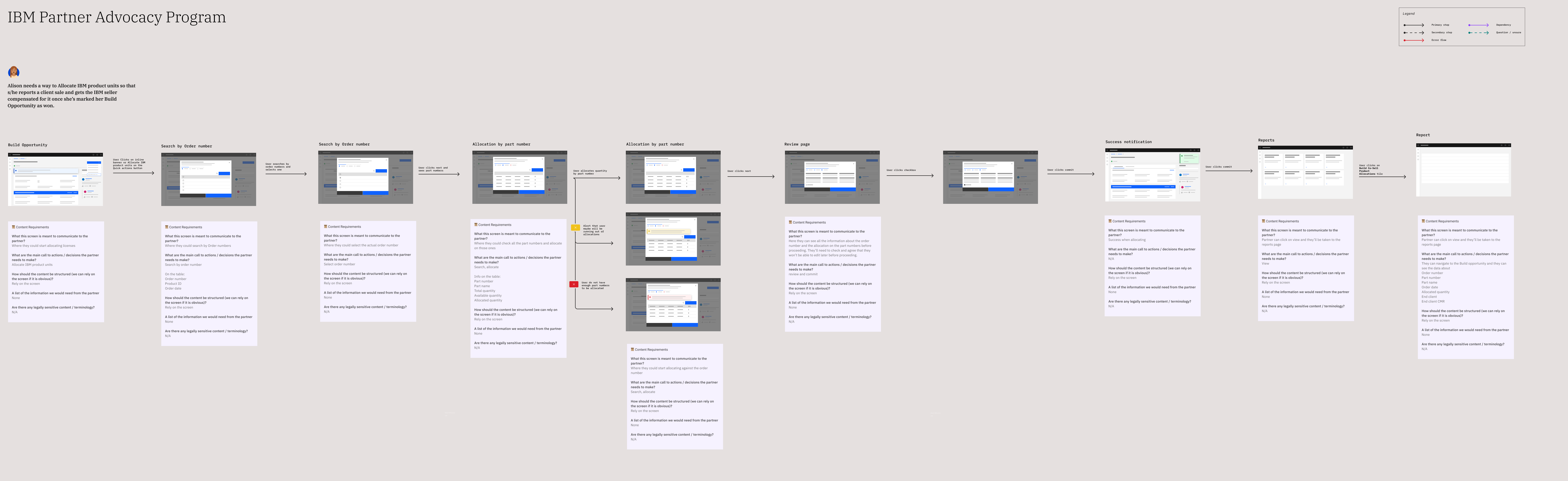
I reviewed early wireframes for opportunity registration, order linking, and incentive tracking with stakeholders and engineering before moving into high-fidelity design — validating the workflows and letting the development team assess feasibility and flag technical constraints early.

Early wireframes for the PAP redesign

After validating flows, I designed the final experience that lets partners reward sellers directly in the portal, replacing the old manual tool entirely.

📊 Results

Key improvements delivered: integrated co-sell opportunity registration, automated IBM order allocation, real-time partner order visibility, and executive dashboards for co-sell activity.

Faster
Co-sell deal processing
Automated
IBM order allocation, replacing manual validation
Real-time
Partner order visibility
Scalable
Co-sell infrastructure supporting IBM's global partner ecosystem

🎯 This redesign turned PAP from a manual, email-driven incentive process into a scalable platform supporting IBM's global partner ecosystem.

💡 Key Learnings & What I'd Do Differently

Three things I'd carry into the next project, learned directly from this one.

01

Enterprise UX is process redesign, not just interface redesign

The hardest part of this project was never the screens.

02

Service blueprinting aligns complex ecosystems

Mapping the full deal-to-commission lifecycle surfaced problems no single team could see on their own.

03

Early engineering collaboration prevents costly redesign

Validating feasibility at wireframe stage, not after high-fidelity design, saved rework later.